


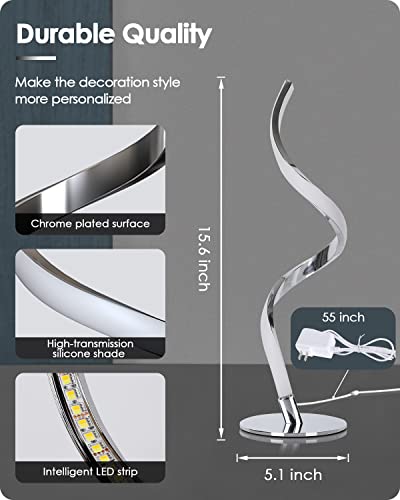

Modern Spiral Bedside Lamp - Dimmable LED Table Lamp for Bedroom, Living Room & Office
$52.99
$37.09
Quantity:
The rapid advancements in technology have significantly transformed the way we live, work, and interact with the world around us. From the ubiquity of smartphones and the rise of social media to the increasing integration of artificial intelligence (AI) and the Internet of Things (IoT), the digital revolution has permeated every aspect of our daily lives.
One of the most remarkable developments in recent years has been the exponential growth of AI and its applications. AI-powered systems have demonstrated remarkable capabilities in areas such as natural language processing, image recognition, and predictive analytics. These technologies have led to a multitude of innovations, from virtual assistants that can understand and respond to human speech to self-driving cars that navigate complex environments with remarkable precision.
The integration of AI into various industries has also had a significant impact on our lives. In healthcare, AI-powered tools are assisting in the early detection of diseases, personalized treatment plans, and even the development of novel therapies. In the financial sector, AI algorithms are used to analyze vast amounts of data, identify patterns, and make informed investment decisions. In the realm of education, AI-powered adaptive learning platforms are tailoring the learning experience to the individual needs of students, helping them to achieve their full potential.
Moreover, the Internet of Things has ushered in a new era of interconnectivity, where everyday devices and appliances are equipped with sensors and internet connectivity, enabling them to communicate with each other and with us. This has led to the emergence of smart homes, where lights, thermostats, and appliances can be controlled remotely or even automatically, optimizing energy usage and enhancing our convenience.
The widespread adoption of digital technologies has also transformed the way we work. The COVID-19 pandemic has accelerated the shift towards remote and hybrid work models, as organizations have had to adapt to the challenges of physical distancing. This has led to a greater reliance on collaboration tools, cloud-based platforms, and video conferencing solutions, allowing employees to stay connected and productive regardless of their physical location.
However, the rapid digitalization of our lives has also raised important questions and concerns. Issues such as data privacy, cybersecurity, and the ethical implications of AI decision-making have become increasingly pressing. As we continue to rely on these technologies, it is crucial that we address these challenges and ensure that the benefits of technological progress are balanced with the protection of individual rights and societal well-being.
In conclusion, the digital revolution has undoubtedly transformed our world, bringing about countless opportunities and challenges. As we navigate this rapidly evolving landscape, it is essential that we approach these developments with a critical and thoughtful mindset, ensuring that technology serves to enhance our lives and not to diminish our humanity.
product information:
| Attribute | Value |
|---|
You'll also love

Yarra-Decor Bedside
Mother's Day Gift: Butterfly Suncatcher Handmade with Real Flowers
$17.49
$24.99

Yarra-Decor Bedside
Yarra-Decor Turkish Moroccan Lamp with Bronze Base Handmade Tiffany Mosaic Glass Lamps Portable Bedside Lamps
$18.89
$26.99

Yarra-Decor Bedside
Cordless Battery LED Table Lamp with Touch Control & 3 Brightness Levels
$21.19
$28.99